Tuesday, December 19, 2006

Turtle Rescuer Keeps Steady Hours Even During the Winter


Jean Beasley never thought that at her age she'd have to learn the electrical and plumbing trades. "If anyone told me I'd be doing this at age 71, I'd have told them they were crazy," said Beasley, as she sawed off the end of a pipe. But the skills come in handy when you're caring for sick and injured turtles, a job that doesn't end, not even when the "Closed for the Winter" sign goes up in front of the Karen Beasley Sea Turtle Rescue and Rehabilitation Center. On a typical winter day, the manpower that goes into caring for the more than 15 sick and injured turtles recuperating there keeps volunteers in a constant scurry.

"People think when we close the doors and put the sign up that nothing goes on here," Beasley said while carefully lifting a blue tank holding one small turtle. "They are very mistaken. There is never a lull." College and high school interns are absent in winter months, adding more work to the local volunteers' load.

"We take the responsibility of the daily chores that the interns do in the summer," volunteer Tina Navale of Surf City said. "But we love it."

The daily routine includes a morning feeding, as each turtle has a diet tailored to its species and health, followed by vitamins and any needed health care.

"I am constantly watching the progression of their wounds, monitoring them with physicals," said Beasley, director of the center. "We do blood work and monitor how they're eating, what they look like, what their attitude is like." Next comes the cleaning, when tanks are scooped for leftover food and the amount of food eaten is recorded. Then come the chores.

Last week, Beasley and Navale spent an entire day connecting the tanks of three new turtles to the plumbing system. The turtles require special attention in the winter, as temperature is key in keeping them warm and on a speedy recovery. Most sea turtles have already migrated this time of year to warmer waters, but some don't make it and end up in the center due to what Beasley calls being "cold-stunned."

"The warmth of the building and the water is very important," she said. "We have to have all of the turtles inside and closed up. That is why we can't have any visitors in the winter, because there is no room to move in here." Working space is cramped, lined with equipment, food, towels and cleaning supplies. A space between the more than 20 tanks in the center is so tight that two people can't pass there at the same time.

"We hope to start building a new center soon," Beasley said. "We had land donated and we are getting the deed drawn up now. We really can't do anything until the transfer." The center isn't solely waiting on the deed of the new land, which is just outside the city limits of Surf City. Funding is key, and there is much more to raise. "We not only have to look at the new building, but run this one," Beasley said. "It costs in excess of $70,000 to run this building each year. So we have to raise more than that."

Beasley hopes to someday see an 18,000-square-foot center, which would cost upward of $1 million. Until then, volunteers will continue to do their best to heal their prized patients. "One in 5,000 to 10,000 turtles survive to be an adult," Beasley said. "So these animals in here represent a lot of turtles that died. That's what makes them so very important."

This year's nesting season on Topsail Island's 26-mile stretch produced 94 nests, though quite a few were lost with high tides during Tropical Storm Ernesto over the summer.

Nests are constantly monitored during the summer, keeping volunteers in all three island towns busy night and day. And turtles are constantly being cared for in preparation for their release. Staff had to say a difficult goodbye to longtime resident sea turtle "Bay" recently. The green sea turtle was found tangled in a flounder net and was admitted to the hospital in 2001. After numerous procedures, Bay was still unable to be released into the wild and required permanent care. The staff found a home for her at the Minnesota Zoo.

"We become quite attached to them and it was hard to see her go," Beasley said. "We begin to see their personalities, how each one responds to a certain volunteer better than another. They recognize our voices."

Turtles can only be released in warm waters, so the center only releases its healthy turtles during the summer season. That means that the current patients are tucked in for the winter. "And looking after them is an everyday job," Beasley said. "We do it all year long."

Sunday, December 17, 2006

Backstory: Swamp Creatures Great and Small

(Photograph) WELCOME: The lurking leer of an American alligator greets visitors to the vast South Florida park.
MARY KNOX MERRILL - STAFF
View photo gallery

Everglades National Park approaches a 60th anniversary of protection.
By Mary Knox Merrill | Assistant photo editor of The Christian Science Monitor
The Everglades teems with the buzz, hum, and chatter of the wild as well as the quiet surprises of the camouflaged. Almost 60 years after Marjory Stoneman Douglas published her bestseller, "River of Grass," boosting public sentiment about the value of the vast swamp and helping win its approval as a national park, man and animal continue the struggle to coexist.
Everglades National Park - 2,358 square miles of Florida's watery trailing-out into the sea - is home to 350 species of birds, including the osprey and great blue heron, and a number of reptiles and amphibians, including the American crocodile and tree frog.
While recent research looks promising for the wading bird population, pollution and urban development remain problems as they encroach on the habitat of animals of all shapes, sizes, and colors. Smoke billows from nearby sugar cane factories, Ft. Lauderdale sprawls right up to the border of the park, endangered birds rest on top of highway light fixtures, and the remains of birds struck by cars pepper the side of the highway. These pressures, combined with the alteration of regional wetland areas threaten the Everglades, which functions as a vast, natural water-filtration system. The National Park Service estimates that 50 percent of south Florida's original wetlands no longer exist, and the wading bird population has been reduced by 90 percent.
What will it take to preserve the biotic engine that supports so much life in South Florida?

A slideshow of other Everglades photos can be seen at

Friday, December 15, 2006

Fort Worth Zoo Building For the Future

Planned herpetarium to aid work against extinction
By CHRIS VAUGHN / STAR-TELEGRAM
Lead herpetology keeper Matt Vaughan and other employees work in tight quarters at the Fort Worth Zoo's aging herpetology exhibit.
Lead herpetology keeper Matt Vaughan and other employees work
in tight quarters at the Fort Worth Zoo's aging herpetology exhibit.

The oldest building at the Fort Worth Zoo is a plain cinder-block box with a leaky roof, shaky plumbing and paper-thin walls that make the place deafening at times. Yet the herpetarium -- more often called the snake house -- is also one of the most popular exhibits at the park, at least with one noticeable group. "Young boys," said Michael Fouraker, the zoo's director of five years.
Snakes, lizards, frogs and turtles from around the world have emerged over the years as one of the park's signature collections and form the heart of an ambitious, behind-the-scenes conservation program that hopes to save species from extinction. After five years of talking about the need and receiving a get-busy warning from its accreditation agency, the zoo is raising money and drawing up plans for a more than $15 million herpetarium that will rival any other exhibit.
"We're going to try to take it out of the old-style, jewel-box, aquarium-in-the-wall herpetarium," Fouraker said. "We have searched the world trying to find an example to model. It looks like we're going to have to build an example. We really want to set the bar high and make a real mark with this." Zoo officials, led by Fort Worth Zoological Association heavyweights Ramona Bass and Ardon Moore, have half of the money in pledges and expect to break ground on the new building by summer. The public contribution will be $1 million in unused bond money that was designated for repairs at the city-owned zoo. The rest will be private donations.
The new building will go up on the site of the aquarium that was demolished in 2002. The herpetarium is the last major exhibit that has not been completely overhauled since 1991, when the zoological association took over zoo operations. Plans will include a more natural environment for the animals and more room for the keepers backstage. But the design will also contain rooms dedicated to saving entire species of frogs and lizards.
Many, if not most, species of reptiles and amphibians are under assault worldwide, and some are disappearing every year because of habitat loss, climate change and disease organisms. A third of all frog and toad species in the world are threatened with extinction, a scale unimaginable in mammals, birds or other animal classes.
"You know the Fort Worth Zoo not to be alarmists," Fouraker said. "This is really serious. They're equating the demise of amphibians with the extinction of the dinosaurs. It's happening that rapidly, and it's that serious." Experts suspect that a particularly lethal fungal disease that has been linked to changes in the climate is decimating frog populations, even in protected areas. And by geologic standards, the decline has occurred in the blink of an eye -- the last 30 years. "Amphibians have been around 100 million years, virtually unchanged," said Robin Moore, amphibian conservation officer with Conservation International in Washington, D.C. "They are survivors. That's why their sudden decline is very alarming. Something has changed. They are sensitive indicators of environmental change."
Increasingly, conservation groups are talking of removing endangered species from the wild so they can be preserved until more is understood about what is happening to them. Fouraker said the Fort Worth Zoo plans to add room in its herpetarium to quarantine and breed some species to make sure they don't become extinct. Zoos in Houston and Atlanta have been active in the same field. "Zoos are definitely rising to the challenge and starting to acknowledge the severity of the situation and wanting to do something to help," Moore said.
The zoo is already basking in the glow of a number of breeding successes involving extremely rare animals -- blue poison dart frogs, Puerto Rican crested toads, and Pan's box turtles and coral cat snakes. "This zoo has had four decades of success in breeding reptiles, but amphibians have been lacking until" recently, said Matt Vaughan, the lead herpetology keeper. "With the amphibian crisis, we'll be on the forefront of conservation with them." Yet that work is being done in a building that is showing its age, and not very well.
The herpetarium -- 9,000 square feet with 120 exhibit spaces -- is a tangle of electrical wires, with heaters behind the exhibits for the animals and air-conditioning streaming in for the visitors. The building has no insulation, collapsed plumbing and insufficient quarantine rooms. It also has a multitude of cracks, holes and other spots where escaped animals can hide.
Fouraker and Vaughan recently took a donor through the building. They stopped at the African dwarf crocodile exhibit, where the donor remarked that the rain falling gave the exhibit a very natural feel. "That's the roof leaking," Vaughan said.
Rarely do the needs of a zoo intersect so neatly with the needs of animals in the wild, and that has Fouraker and others at the zoo energized about their mission. "We have led the way on turtle survival, and we have a tremendous lizard collection," Fouraker said. "But we hope to bring more emphasis to amphibians in the new building."
Breeding success
The Fort Worth Zoo has more than 700 snakes, lizards, frogs and turtles in its herpetology collection. The zoo is one of the most active and successful in the nation at breeding reptiles and amphibians, including some of the rarest and most endangered species in the world.

Puerto Rican crested toad
Only toad native to Puerto Rico
Listed as critically endangered
Tadpoles bred in Fort Worth are being reintroduced in the wild

Pan's box turtle
Found only in two Chinese provinces
Discovered in 1984
Critically endangered by poaching and loss of habitat

Coral cat snake
Lives in trees in Central America
Has the same tricolor pattern as the venomous coral snake
Believed to have been bred in captivity for the first time

Thursday, December 14, 2006

PetClub UK Launches Online Information Website

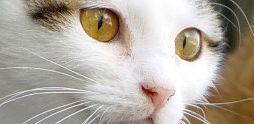
petclubukcat.jpgUs Brits are supposed to be a nation of animal lovers, and with that in mind, PetClub UK has launched its interactive information portal for all manner of pets.
The site is aimed at anyone who already owns an animal, is looking to take one on, or works with them, with separate sections for cats, dogs, horses, small animals, reptiles, and aquarium.

The site aims to be a one-stop shop for pet lovers, providing useful tools and resources, plus a discussion forum, and the ability for users to share photos of favourite pets.
Animal loving founder of PetClub UK Chris Jones, himself a dedicated reptile enthusiast, said "I set out to publish an informative, factual site that will help owners understand and look after their pets. Where we recommend products, these are specifically to help ensure that the creatures we care for lead healthy, contented lives. The main aim is to create a community for the exchange of experience, best practice and sound advice."
All visitors can access the information pages and articles but members of PetClub UK are entitled to additional benefits of discounts on every product, a regular newsletter and the chance to enter regular competitions to win some fantastic prizes. Annual membership of the Club costs L5 and is open to everyone.

Source: TechDigest


Wednesday, December 13, 2006

FOLLOW-UP: 500 Species Found in Census of Marine Life

Some 500 previously unknown species of marine life were discovered during the latest Census of Marine Life (CoML), a research effort involving some 2000 researchers from 80 countries. The discoveries, made during 19 ocean expeditions in 2006, included a gigantic 1-centimeter in diameter single-celled organism in the Nazare Canyon off Portugal, a "blonde-haired" lobster near Easter Island, a "chewing" squid, and a four-pound (1.8 kg) lobster off Madagascar.
"Each Census expedition reveals new marvels of the ocean – and with the return of each vessel it is increasingly clear that many more discoveries await marine explorers for years to come," said Fred Grassle, Chair of the Census Scientific Steering Committee. Now in its sixth year, the Census is working to record the diversity, distribution, and abundance of global marine life. Among its many findings in 2006:

Species discovery


    Kiwa hirsuta, the Yeti crab, a new species found
    near Easter Island. Credit: Ifremer/A. Fifis ©2006.


    A colonial siphonophore: several swimming
    bells surround red and yellow feeding
    tenticles. Grows to 1.5 cm. From the
    Danish Galathea 3 expedition off Broome
    in Northwestern Australia, November 2006.
    Photo Credit, Russ Hopcroft,
    University of Alaska Fairbanks ©2006


    A new species of squid, Promachoteuthis sloani,
    found along the Mid-Atlantic Ridge.
    Credit: MAR-ECO/R. Young ©2006.


    Tracks of tagged sooty shearwaters as they made
    their way back and forth across the Pacific Ocean.
    Credit: TOPP ©2006


Macro microbe. The protozoan that Census explorers of the continental margins discovered in the Nazare Canyon off Portugal differs from the usual protozoans seen swimming in a drop of water under a microscope. The single cell of this fragile new species of Xenophyophore, found at 4,300 m depth, is enclosed within a plate-like shell, 1 cm in diameter, composed of mineral grains.

Furry crab. Near Easter Island, Census researchers discovered a crab so unusual it warranted a whole new family designation, Kiwaidae. Beyond adding a new family to the wealth of known biodiversity, its discovery added a new genus, Kiwa, named for the mythological Polynesian goddess of shellfish. Its furry or hairy appearance justified its species name, hirsuta.

A squid that chews. Among the 80,000 organisms – encompassing 354 families, genera and species – that Census deep-sea investigators collected from the Mid-Atlantic Ridge was the reference specimen or holotype for a new species of squid: Promachoteuthis sloani. Although collection easily damages the soft cephalopods, the hard beaks are unique to each species, including that of the new squid, which looks quite capable of chewing its food.

Komoki in Antarctic waters
. Komokiaceae or "komoki" dominate deep-sea foraminifera, protozaons with false feet used for locomotion and food collection. In the Weddell Sea, where ice crushed the ship of Antarctic explorer Shackleton in 1915, Census polar researchers found 59 komoki and komoki-like species, at least 42 unknown to science.


Doubling Zooplankton
. Census zooplankton researchers discovered 3 new genera and 31 new species of copepods and mysids, small crustaceans, in Southeast Asian, Australian, and New Zealand waters. Analysis of collections from biodiversity hotspots, the deep sea, and other unexplored regions is on track to double the number of known zooplankton species


Extremes of Science


Hottest
. At a thermal vent 3 km below the surface in the equatorial Atlantic, Census researchers found shrimp and other life forms on the periphery of fluids billowing from Earth’s core at an unprecedented marine recording of 407ºC, a temperature that would melt lead easily. Although the species resemble those around other vents, scientists want to study how, surrounded by near-freezing 2ºC water, their chemistry allows them to withstand heat pulses that approach the boiling point – up to 80ºC. Shrimp were seen on the walls of the vent chimney. Others in the habitat include mussels and clams. All somehow tolerate an environment of extreme temperature changes within a few centimeters and high concentrations of heavy metals from the vent fluids.


Darkest
. Southern Ocean census takers revealed an astonishing community of marine life shrouded beneath 700 meters of ice – 200 km from open water. Equally remarkable, sampling of this most remote ocean’s depths during three lengthy cruises yielded more new than familiar species.


Most. Census fish counters' observation off the New Jersey coast of 20 million fish swarmed in a school the size of Manhattan Island qualifies as most new abundance found. Sound emitted by a new ship-based technology illuminates life in an oceanic area tens of thousands times larger than previously possible. It updates instantaneously and continuously, revealing the extension and shrinking, fragmentation and merging of the island-sized swarms as a person might watch schools of minnows swimming in a brook beneath a bridge.


Deepest
. Sampling 5 km below the surface in the Sargasso Sea, deploying a unique trawl configuration that filtered large volumes of water for rare-but-diverse zooplankton living in the ocean’s deepest depths, Census experts from 14 nations caught these drifting, often soft and elusive animals in a sophisticated net, the MOCNESS. They collected more than 500 species, including 12 likely new species, eating each other at the great depths or living on organic matter falling like snow from above. (CMarZ photo of menacing-looking, animals such as this amphipod, a small prawn-like crustacean, the supposed inspiration for the movie Alien.


Oldest
. Census seamount researchers found a shrimp, believed extinguished 50 million years ago, alive and well on an underwater peak in the Coral Sea. Neoglyphea neocaledonica was nicknamed "Jurassic shrimp" by its discoverers, who say it rivals the find in South Africa and Indonesia of the coelacanth, a prehistoric fish previously known only through fossils.


Richest
. In the sense that biodiversity is richness, Census microbe hunters found 20,000 kinds floating in a single liter of sea water. Samples were taken from the Atlantic and Pacific, including from an eruptive fissure 1,500 meters deep on a seamount in the Pacific a few hundred kilometers west of Oregon, USA. Revealed by DNA studies, most of the different kinds of bacteria were unknown and likely rare globally. The richness of the diversity invites speculation about what rare species contribute to their biosphere and an estimate that the kinds of bacteria in the oceans exceed five to 10 million. The researchers also began assembling the best-ever video of protists (mostly microscopic organisms that are neither animals, plants, or fungi) and to pioneer optical and genetic techniques to extend the limits of knowledge. (The video is available for media at the embargoed media materials URL. Credit: Jeremy Pickett-Heaps)


Farthest
. Tracking tagged sooty shearwaters by satellite, Census researchers mapped the small bird’s 70,000 km search for food in a giant figure eight over the Pacific Ocean, from New Zealand via Polynesia to foraging grounds in Japan, Alaska and California and then back. Making the longest-ever electronically-recorded migration in only 200 days, the bird averaged a surprising 350 km daily. In some cases, a breeding pair made the entire journey together.


Largest
. Among the many new species discovered by Census participants during 2006, a 1.8 kg (4 lb) rock lobster that Census explorers found off Madagascar may be the largest. Named Palinurus barbarae, the main body spans half a meter.
While the census found hundreds of previously unknown species -- including 150 species of fish -- the researchers behind the project also found evidence that marine biodiversity is in decline due to human influences. "The historical studies of the CoML agree with recent studies showing steep declines of most wild populations of marine animals that people eat," says Grassle.
According to a CoML news release, researchers "reconstructed the changing abundance of marine life in 12 estuaries and coastal seas around the world. In archives from Roman times in the Adriatic Sea, the medieval era in Northern Europe, to Colonial times in North America and Australia, they confirmed the fears that exploitation and habitat destruction depleted 90 percent of important species. They also confirmed elimination of 65 percent of seagrass and wetland habitat, a 10 to 1,000-fold degradation of water quality, and accelerated species invasions."
"The past richness of the oceans in many near shore regions is hard for people today to believe," added Grassle. Despite the declines, the census says that the research will help humans better utilize marine resources going forward. "The dream of abundant and sustainable stocks of commercial fish is now one step closer, thanks to this Census of Marine Life program. The new data reveal for the first time those zones of the ocean where we have the highest leverage for conservation and thus smarter fishing," said D. James Baker, President of the Academy of Natural Sciences of Philadelphia.
CoML found that marine preservation efforts are working in some areas, with "signs of transitions from degradation to recovery where conservation was implemented during the 20th century." Looking towards 2010, CoML seeks to have completed an initial census describing what lived, now lives, and will live in the oceans. "The vast expanse of the oceans, the rarity of some animals, their movements, and fluctuations challenge Census researchers. Happily, the astonishing progress of the past six years shows the community will create the first-ever Census of Marine Life in 2010," said Jesse Ausubel, a program manager for the Sloan Foundation, a Census sponsor.
"Together, we can see the wonders of the ocean and excite the world to preserve and increase them," added Ron O’Dor, CoML Senior Scientist.

This article is based on a news release from CoML. Photos from mongabay.com

Tuesday, December 12, 2006

The Never-Ending Marvels of the Ocean

Source: Playfuls.com
The ocean has yet more mysteries to yield to human kind; those with an affinity for such discoveries can only stand in awe as Nature reveals itself to us mortals.
2006’s Census of Marine Life participants must have stood in awe. This is the sixth year that researchers from around the world have collaborated, in a valiant attempt to shed some light over the dark depths of global seas and oceans and to attach a statistical viewpoint to marine life. They recorded the diversity and distribution of species, and came up with some startling discoveries.
“Animals seem to have found a way to make a living just about everywhere,” said Jesse Ausubel of the Sloan Foundation, about the findings of year six of the census of marine life. Ron O'Dor, a senior scientist with the census, said: “We can't find anyplace where we can't find anything new.” These are just a few of their findings.

* CoMF researchers found shrimp, as well as mussels and clams, living in waters of 407ºC. The animals were found in the equatorial Atlantic, at a thermal vent 3 km below the surface that releases fluids containing heavy metals from the Earth’s core – hot enough to melt lead. This is the hottest sea vent ever documented. Bizarrely enough, the vent is surrounded by near-freezing water.
“This is the most extreme environment and there is plenty of life around it,” said Chris German, of Britain's Southampton Oceanography Center and a leader of the Atlantic survey.

* Researchers investigating the waters of the Southern Ocean discovered a community of marine life thriving in darkness below 700 meters of ice and 200 km away from open water.

* A school the size of Manhattan Island, comprising some 20 million fish, was reported off the coast of New Jersey. This is the most abundant grouping of sea creatures ever found.

* Census experts utilized a sophisticated net dubbed MOCNESS to catch animals living at great depths below the surface (5 km) in the Sargasso Sea. 12 new species were reported.


*
CoMF devotees uncovered a shrimp that scientists believed had become extinct 50 million years ago – it was actually quite prosperous in its underwater peak in the Coral Sea. The creature, officially named neoglyphea neocaledonica, received the nickname of “Jurassic shrimp”, in honor of its mathusalemic age.

* Census microbe hunters found 20,000 kinds of bacteria floating in a single liter of sea water. The samples came from the Atlantic and Pacific. DNA studies revealed that most of the different kinds of bacteria were unknown and likely rare globally. Researchers estimate that the kinds of bacteria in the oceans exceed five to 10 million.

* Sooty shearwaters seem to be deserving of the moniker “globetrotters” By way of satellite, Census explorers tracked tagged specimens as they made their way through an impressive distance of 70,000 km, searching for food. They flew over the Pacific Ocean, from New Zealand via Polynesia to foraging grounds in Japan, Alaska and California and then back, which makes this trek the longest migration ever recorded electronically, over a period of just 200 days. The average daily distance was even as long as 350 km.

* The largest species discovered during a 2006 Census expedition was a 1.8 kg rock lobster named Palinurus Barbarae, off Madagascar. The main body spans half a meter. Census scientists organized 19 ocean expeditions in 2006 (a 20th one is underway in the Antarctic). The number of active sampling sites grew exponentially from 30 to 128 in 2006 alone, and satellites were a big part of the explorations, as well as laboratories, archives and other technology.

"Each Census expedition reveals new marvels of the ocean – and with the return of each vessel it is increasingly clear that many more discoveries await marine explorers for years to come,” says Fred Grassle, Chair of the Census Scientific Steering Committee.

Monday, December 11, 2006

What to Get Your Pet for Christmas

Is your pet on your Christmas list?
For an increasing number of pet owners, the answer is yes. The American Pet Products Manufacturers Association conducted a survey last year that found eight of 10 dog owners buy presents for their dogs and 63 percent of cat owners buy for their pets. The average for each gift (which wasn’t just tracked for the holidays — pet owners also buy for birthdays, Valentine’s Day, Easter, Halloween and other special occasions) was $17. This year alone, Americans will spend about $38 billion in pet supplies.
So, what can you get this year for the pet that has everything? Well, more of the same. If your dog loves chew toys, a new one is sure to be a hit. A cat that enjoys catnip will undoubtedly like that herb in a new toy.
Really smart dogs may enjoy a new trend in toys: Brain-teasers for pups. Ourpets.com offers a range of “interactive toys” that are intended to keep a dog busy for a while. Note the MolecuBall, which rolls and slides in unpredictable directions. As it moves, the dog figures out how to get the toy to release a treat. The Buster Food Cube also rewards canines for their problem-solving behavior — as the dog plays with the cube, treats come trickling out of a small hole on the side. “This motivates the dog to learn how to ’work’ the cube so more treats roll out,” the company’s press release says. I haven’t tried these out on my personal dog, but they’d be a good bet for someone looking to keep their pet entertained for a few hours.
Your cat may like a new scratching post or condo. There are literally hundreds of different styles to choose from, ranging from small cardboard models to huge, carpeted, multi-level constructions. I always like to recommend the Cosmic Catnip Alpine Scratcher, an inexpensive cardboard “hill” that lets cats exercise their claws and enjoy catnip at the same time. These can be found in different sizes at most pet supply stores. Of course, you can cover your bases with a gift basket for your cat or dog, filled with a variety of goodies and toys.
Looking for something for a smaller pet? The KONG Company, which makes popular chew toys for dogs, has recently come out with a line of chew toys that work for rabbits, ferrets and rodents. I haven’t seen these available yet, but the company says they should be out for Christmas, so keep your eyes peeled! I do know that while the new one has pictures of rabbits and rodents on the packaging, the company has an existing KONG for ferrets that may be easier to find (in a pinch, order online at amazon.com or your favorite pet supply store).
The lizard in your house might enjoy a vibrating food dish. Sounds funny, but makers at the Rolf C. Hagen Corp. believe that its Exo Terra Vivicator Feeding Dish will encourage reptiles and amphibians, which normally prefer their food to be live, to eat canned food or pellets. The bowl moves food across its rubber surface and is controlled by remote to vibrate for 15-second intervals.
When looking for a present for any pet, make sure it is wrapped safely (if you choose to wrap the gift at all). Ribbons can be ingested by cats and all kinds of pets can nibble on or eat paper and cardboard. It’s probably best to avoid these issues by removing any packaging from the pet right away. You’ll also want to steer clear of pet toys that look like household items — the kids’ stuffed animals or your favorite slippers, for example — so they don’t inadvertantly encourage your pet to chew on the wrong thing.
Don’t forget, if buying a food item, to check the label for anything to which your pet might be allergic. Toys or treats that have dyes may also cause problems — pets can’t tell the colors, but those dyes might stain your carpeting or furniture. Give anything edible in moderation and supervise so that your pet doesn’t accidentally choke or otherwise get hurt.
Photo courtesy of HickerPhoto / Article by Jennifer Gardner