Sunday, December 10, 2006

Protection of Biodiversity


The Osa Peninsula, in the Costa Rican South Pacific, is a unique place which, in only 160,000 hectares (some 395,355 acres), encompasses 2 percent of the world’s biodiversity and 50 percent of all the species in Costa Rica. Its forests are home to at least 5,000 species of plants, over 700 species of trees, more than 8,000 species of insects, and 117 of reptiles. Also, there we find 375 species of birds, 124 of mammals, 40 of fresh water fish, and 28 species of dolphins and whales.
In order to protect that wealth, The Osa Campaign (Campaña Osa in Spanish) was launched in 2003, but it was not until now that the project was made public. It is a joint effort by the Costa Rica-USA Foundation (CRUSA), the Ministry of the Environment and Energy, Conservancy International, and The Nature Conservancy. The goal is to collect us$32.5 million, by the year 2008, to manage conservation and establish a trust. So far, us$19 million has been collected and each Costa Rican is expected to donate at least us$1, to add another us$3.2 million in the coming months.
Several major Costa Rican firms, such as La Nación, Intel Costa Rica, Tribu, Holtermann, and Pipasa partake in the non-profit campaign.

Thursday, December 07, 2006

Dramatic snake colour-change mystery solved

Source: Physorg
Dramatic snake colour-change mystery solved
An adult green python (top) and a spectacular
yellow juvenile green python.
Credit: Australian National University
The mystery surrounding a snake that undergoes a spectacular colour change has been solved by ANU ecologists who have found that the skin of the green python – which begins life either bright yellow or red – transforms to blend into a new habitat as the snake gets older.
Dr David Wilson and Dr Robert Heinsohn from the Centre for Resource and Environmental Studies at ANU, with Professor John Endler of Exeter University, solved the mystery after a three year study radio-tracking the green python at Cape York Peninsula. “Animals sometimes change colour during their lives, but none as dramatically as the green python of northern Australia and New Guinea. It has puzzled evolutionary biologists for decades,” Dr Heinsohn said. “This beautiful reptile is popular in the pet trade because it hatches either bright yellow or red, but eventually turns emerald green. It turns out there is a very good reason for this dramatic change.”
For the study, published this week in the scientific journal Biology Letters, the researchers radio-tracked a large number of juvenile and adult pythons and analysed their colours using advanced spectrophotometry. To their surprise, they found that the brightly coloured youngsters live in a completely different habitat to the older snakes. The juveniles remained outside the rainforest where they hunted small prey such as skinks and cockroaches, whereas the adults moved into the rainforest canopy to hunt rodents and birds.
The juvenile yellow and red colour allows them to blend in remarkably well with the multi-coloured leaves and grass at the forest edge. The adult green allows them to hide from their predators as they hunt for birds and rodents in the canopy.
“It was only when we established the total divergence in behaviour of the juveniles and adults that we could begin to understand their remarkably different colours. It takes a year before the young ones are large enough to catch bigger prey like birds. They then shed their skins, change to green, and move inside the rainforest to try their luck off the ground. Drab juveniles are the norm in the animal world, but the brightly coloured young of green pythons are unique. They are helping us to understand where the bright and beautiful colours seen in nature come from and how they are maintained,” Dr Heinsohn said.

Wednesday, December 06, 2006

20 ft Crocodile Skeleton on Display in Orissa

Source: India News
The skeleton of a massive 20 feet crocodile, probably one of the largest in India, has been put on display at a wildlife park here for the benefit of researchers and students. The male crocodile was found dead in September at Kaliabhanjadiha area inside the famous 670 sq km Bhitarkanika National Park, 130 km from the Orissa capital Bhubaneswar, which is home to the largest population of giant saltwater crocodiles in India.
The skeleton is kept at the interpretation centre of the crocodile breeding and rearing farm at Danmal inside the national park, said Bhitarkanika divisional forest officer A.K. Jena. A team of herpetologists painstakingly brought the skeleton to the centre, preserved it and mounted it on a frame, he added. The whole process took about a month.
The age of the crocodile is not known. 'We will determine it after tests,' said reptile researcher Siba Prasad Prasida who was involved in the elaborate preservation work.
Wildlife officials are now planning to focus on preserving the skull of another crocodile kept by members of the erstwhile royal family Rajkanika in Kendrapada. According to noted reptile researcher Romulus Whitaker, the skull measures 75 cm, considered to be the largest saltwater crocodile in India. The size of a skull is nearly one-seventh of the reptile's body length. The reptile therefore could have been 25 ft, Whitaker, who founded the crocodile bank in Chennai, said. 'My grandfather Raja Rajendra Narayan Bhanja Deo had shot the biggest crocodile in 1930 within the park as it had killed many people,' said Shivendra Narayan Bhanja Deo, a member of the royal family which shifted it to his residence in Bhubaneswar.
The Guinness Book of World Records this year registered the presence of a 23 ft estuarine crocodile in Bhitarkanika as the largest crocodile in the world.

Tuesday, December 05, 2006

Expose Students to Pros and Cons of Theory (Editorial)

Source: The News Star
The following is an editorial written by Sociology Ph.D. and attorney Jack Wright, Jr.:
It is amazing that anyone would object to teaching evolution as merely a theory, and not an established fact. There are numerous objections to the theory of evolution, and every student should be made aware of them. After all, any educational system should be guided by the truism, "Whoever knew the truth put to worse, in a free and open encounter?" (John Milton).
The theory of evolution has a testable link the transitional form. If Darwin were right, scattered throughout the geological record would be millions of intermediate forms between fish, reptiles, birds, animals and man.
In 1872, an oceanic expedition set forth on the H.M.S. Challenger to retrieve transitional forms from the oceans. But alas and a lack, neither the Challenger nor any other expedition before or since has been able to dredge up any meaningful kind of intermediate form. The problem has been called the 'missing link.' What is missing? The evidence.
Dr. Elridge, a world-famous paleontologist of the British Museum, has remarked, "Nine-tenths of the talk of evolutionists is sheer nonsense, not founded on observation, and wholly unsupported by the facts. This museum is full of the proof of the utter falsity of their views. In all this great museum, there is not a particle of evidence of the transmutation of species." Notwithstanding shortcomings of the Darwinist theory, it has been accepted in biology textbooks as a fact. Anyone questioning this world view is subject to being treated as a member of the flat-earth society.
Darwin was honest enough to point out what would be necessary to refute his theory: he wrote, "If it would be demonstrated that any complex organ existed which could not possibly have been formed by numerous, successive, slight modification, my theory would absolutely break down." The Harvard atheist, now deceased, Stephen J. Gould, points out Darwin's theory fails at this point: "Of what possible use are the imperfect, incipient stages of useful structures?" What good is half a jaw? Or half a wing? Evolutionists have tried to salvage Darwin's thought by adding mutations.
In response, Dr. Walter Brown, in his book, In the Beginning, writes, "What mutations could transform a crawling larva into a flying monarch butterfly that can accurately navigate three thousand miles, using a brain the size of a pinhead?" Obviously, the vast information that directs every stage of a larva and an adult's development, including metamorphosis, must reside in its genetic material at the beginning. This only fits creation. Thus both within and without the evolutionary camp, there are devastating criticisms of Darwin's theory. Students should be exposed to the pros and cons of this debate, so they can make up their own minds about what is, ultimately, the truth.

Sunday, December 03, 2006

Robert Wilson Pledges $1 Million to Halt Bird Extinctions

Source: PNNOnline
American Bird Conservancy
(ABC) and its partners seeking to acquire habitat for endangered and declining bird species received a major boost with the announcement of a $900,000 challenge grant and $100,000 for other conservation work from New York philanthropist Robert Wilson.
“We are thrilled by the huge opportunity Robert Wilson’s foresight and dedication presents for conserving the world’s rarest bird species,” said George Fenwick, President of American Bird Conservancy. “With the average cost to acquire land in South America only $100 per acre, this generous challenge grant means many more imperiled bird species will have a permanent place to call home.”
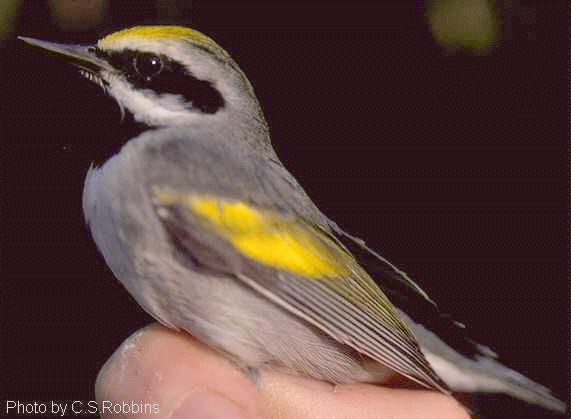
This year alone, ABC and its partners have so far protected 28 tracts of land in Central and South America that provide core habitat for more than 700 species of birds, including four that are globally endangered, the Santa Marta Parakeet, Jocotoco Antpitta, Black-breasted Puffleg, and Long-whiskered Owlet. The sites also provide key wintering habitat for dozens of migratory songbird species including the Cerulean and Golden-winged Warblers.
Mr. Wilson has asked for a 3:1 match for his gift, to leverage additional support and encourage others to participate in this critical land acquisition campaign. “These funds will be targeted towards priority sites for species that are very rare or declining fast,” said Fenwick. “With the help of others to match Mr. Wilson’s generous offer, we can buy parcels to protect several additional priority bird species. But it is not only birds that will benefit. Biodiversity including declining frogs and other amphibians, reptiles, mammals, and plants can all benefit from the management of these lands as protected reserves.”
Priority bird species in immediate need of habitat protection in Latin America include Worthen’s Sparrow and Long-billed Curlew (Mexico), Honduran Emerald hummingbird (Honduras), Chestnut-capped Piha (Colombia) and Lear’s Macaw (Brazil).
ABC has embarked upon a new, $40 million, five-year initiative, the American Birds Campaign aimed at protecting the great bird diversity of the Americas. The central themes of the conservation campaign are ensuring the future for endangered birds, restoring habitat for all declining birds, eliminating the worst threats, supercharging the bird conservation community, and applying conservation innovations to solve problems. Mr. Wilson’s pledge includes $900,000 for land purchase and $100,000 for other conservation work.

Saturday, December 02, 2006

Where do reptiles such as alligators go when winter comes?

Source: Orlando Sentinel
While people burrow under mounds of warm blankets on cold winter nights, alligators also seek shelter from the cold. But in their case, muddy burrows provide warmth, and the beds they settle into are often on the side of a riverbank or at the bottom of a lake. Although they might disappear from sight for several days, alligators don't actually hibernate. Their metabolism slows down, and they breathe less often. But they seldom stay undercover longer than a week or two -- not long enough to be considered hibernation.
During times of dormancy, alligators live off their own fat, not needing to consume new food. But as soon as the sun comes out and the weather warms up, gators emerge from their dens to glide through the water and bask in the sun.
Occasionally in winter, alligators use a unique method to maintain body heat. They pile on top of one another in huge stacks of reptilian bodies. While the bottommost gators must gain massive amounts of heat from this precarious approach to generating energy, there is doubt that it benefits the reptile unfortunate enough to have landed on top of the pile.

Friday, December 01, 2006

Elusive Alligator May Have Said 'See ya later,' but Reptile Sightings Still Reported in Crown Colony


The Lufkin Daily News

One of the top golf courses in the state, Lufkin's Crown Colony Country Club, attracts people with its lush greens, its lavish fairways and its scenic beauty. But according to some who live there or frequent the area on a regular basis, alligators seem to like it, too. Danny McCoy, manager of the Crown Colony Country Club, said he had heard rumors about alligators in lakes that dot the club's golf course.
"I have never seen them myself," he said. "They're probably very small. Our grounds superintendent is always keeping an eye out for them ... but there is not any confirmation." Not many members have actually reported sighting the alligators, McCoy said. While some members claim to have seen them, they did not want their names used in this story. "We saw the head (a couple of weeks ago)," said a woman who plays golf regularly on the Crown Colony course. McCoy believes the alligator tales began after the black panther legends died down. "There was a story that there was black panther going around and then (the alligator story) came up."
Stories of alligator sightings have been going on since the summer, McCoy said, "but the employees never saw them." The golf course has three small lake areas that are anywhere between five and 10 feet deep, he said. The alligators could be there. There are a lot of creeks too, but they don't hold water continuously. "In the summertime, alligators can be seen basking in the sun," McCoy said. "But we didn't see them in the summer."
Gordon Henley, director of the Ellen Trout Zoo and resident alligator and crocodile expert, said he too had heard that there were alligators in or around the golf course. He has not seen them either, and he says this is the wrong time of the year to start looking for them. "(The current) weather conditions cause alligators to retreat," Henley said. "In (the Ellen Trout Lake) I don't recall seeing alligators when the temperature was below 80 degrees."
Alligators need a pond or a lake to live in — "a wet environment," Henley said. "They need ample food supply and shelter. And there has to be more than one to multiply." Alligators eat snakes, turtles, fish, raccoons and opossums, he said.
While they are no longer an endangered species, they are still threatened, said Monique Slaughter, natural resource specialist for the Texas Parks and Wildlife Department. It is important for people to remember, Henley said, that the eastern part of Texas is the natural home of the alligators. Mostly, alligators are content basking in the sun and being left alone, Henley said. The danger comes when people try feeding them. "They don't eat people as a regular food item," he said.
McCoy said he would concerned about alligators on the golf course in the country club area because of pets, dogs and children who are always nearby. "If we see one, we will call the parks and wildlife department," he said. "And we encourage anyone who sees one to do the same."