Saturday, January 13, 2007

Roboboa - The Robotic Snake

And now for something completely different -- a toy, robotic snake...
Roboboa When it comes to robot toys, no one does it better than WowWee. The company has got a range of cool new models coming out soon and we’re particularly taken with this one, the wonderfully-named Roboboa.
You can control the robot snake by means of a remote control, program in 40 different moves, or just leave it to its own devices. It’s partial to music and likes a boogie, swaying in time to the tune.
To complement this disco routine, Roboboa has a head full of lights which it can flash on and off in an hypnotic manner (Robocobra would have been a more accurate name, but not as catchy). You can watch a (poor quality) video of Roboboa in action here.
The synthetic snake can also be used as an iPod speaker, alarm clock and room sentry. Motion sensors allow it to track intruders and shine its beady gaze on them as they move about. Get a room full of these and you’ll have the stuff of nightmares.

Monday, January 08, 2007

Iguana tale - Drue Sokol's slithery, scaly animal companion as cuddly as a pup

In the minds of Drue Sokol's high school classmates and friends, girls like furry pets and scaly animals are for boys. Then they met Drue -- and Zelda. "People say, 'Where did you get your scratches? A kitty cat? A dog?' " says Drue, rubbing the faint red marks on her arms. "No, a four-and-a-half-foot iguana."
Other children beg for a puppy, a kitten or a bunny. Drue, coming from a reptile-loving family, always wanted an iguana. So when her grandfather -- a long-time reptile owner -- gave her the salamander-sized baby Zelda more than a half-dozen years ago, she was as happy as a lizard lounging in the sun.
For Drue, Zelda isn't as good as her friends' and neighbors' pets. She's better. The green iguana -- a type indigenous to Mexico, southern Brazil, Paraguay and the Caribbean Islands -- cuddles up to Drue when she's at her laptop. She plops her long, slithering body on the keyboard at just the moment Drue begins tackling a serious math problem or huge paper. "She has a keen sense of knowing when I'm doing something really important," Drue says. "She just sits in the middle."
Drue, a straight-A 15-year-old student at Albany Academy for Girls, doesn't mind the occasional distraction. When the reptile isn't feeling frisky, she can be good homework company, scooting up alongside Drue and resting there for an hour or more. If the teen steps away for a snack or to take a phone call, Zelda lies by the computer watching the screen saver, an ocean scene. Drue used to carry Zelda upstairs, and the girls would hang out in Drue's room -- but now that Zelda's so big, the 5-foot-4 Drue trips on Zelda's tail going up the stairs, a painful experience for both. So they stick to the first floor, where Zelda is free to roam -- when someone's home. Zelda also loves curling up on Drue's lap for a little TV. Animal Planet is the girls' favorite channel. It's one of the few times Zelda -- whose brain is smaller than a nut -- looks alert and completely clued in. The other time is dinner.
Zelda's diet consists of leafy greens, kale and bananas. She inhales each of her three meals in less than a minute. Her favorite family members are the ones who feed her. She shies away from men, like Drue's dad, who is the medicine deliverer and nail clipper. "I used to think it was love," says Drue. "But one day I realized she's more excited to see me when she's knows I'm going to feed her." Despite her voracious appetite, Zelda only uses the bathroom a couple times a week. She uses a litter box, a skill she picked up after only a few tries. She was so successful, that it led the family to believe Zelda may actually be pretty smart. Then Zelda falls off her indoor, window-side perch out of sheer fear of the lawn mower two houses away or can't figure out how to get out of her climate-controlled habitat, despite its exit. "I try to show her that there is an open door in which she can get out of," says Drue. "But once she walks out, she walks right back in and is amused for another fifteen minutes or so." Then she starts clawing at the wall again, unable to find her way out.

Wednesday, January 03, 2007

New Species Of Lizard Found In Borneo


Chris Austin, along with colleague Indraneil Das from the Institute of Biodiversity and Environmental Conservation at the Universiti Malaysia Sarawak, will publish their findings and photos of the new species in the prestigious Journal of Herpetology. (Image Credit: Dr. Chris Austin / courtesy of Louisiana State University)

Science Daily — Chris Austin, assistant curator of herpetology at LSU's Museum of Natural Science, or LSUMNS, and adjunct professor in biological sciences, recently discovered a new species of lizard while conducting field research in Borneo. Austin, along with colleague Indraneil Das from the Institute of Biodiversity and Environmental Conservation at the Universiti Malaysia Sarawak, will publish their findings and photos of the new species in the prestigious Journal of Herpetology. The article, which will contain the currently embargoed scientific name of the species, is slated for publication in March, 2007.
"We actually found four specimens at once," said Austin. "One of the best methods for finding lizards in the rainforest is to look under logs. We found two individuals of the new species under one log and two more under another." With more than 15 years of fieldwork experience behind him, Austin knew immediately that he had found a new species. After collecting the lizards, he and Das began the difficult work of proving what they already knew.
"Determining that a species is new to science is a long and laborious process," said Austin. "Natural history museums and their invaluable collections are critical in that they allow scientists to examine known biodiversity in order to determine a species is new." He and Das examined specimens from a slew of museums around the world. Natural history collections, such as the more than 80,000 specimens in the LSUMNS reptile and amphibian collection, are important because taxonomy -- the science of describing, naming and classifying organisms -- has implications for basic and applied fields of science. "We can't conserve what we don't know we have. It is imperative that we know what species exist in order to preserve them for future generations," said Austin.
He used the cutting-edge molecular genetics lab at the LSUMNS to decipher the genetic code of the lizards. "We sequenced the DNA of this new species and several other closely related species in order to help our diagnosis," he said. "Using DNA to help describe new species is becoming one of the most important tools for scientists to use in documenting and describing biodiversity." The global decline of biodiversity has become a major public issue recently, and the use of modern molecular methods is proving to be fundamental in gaining a better understanding of the situation.
The new species is distinguishable from its closest cousin, a type of skink found in the southern Philippines, in several distinct ways:

  • different color patterns;
  • its structure, or morphology;
  • differences in scale count, which is one of the basic ways scientists distinguish between species;
  • and significant genetic variations.

These traits combined to confirm the original hypothesis that the lizard was, in fact, an entirely new species. Austin spent the entire summer of 2006 in New Guinea, his geographical area of expertise, conducting fieldwork with graduate students.
He is currently working on research funded by the National Science Foundation to understand why New Guinea, called a megadiverse region, has such a high level of biodiversity. "While we were there, we collected what we think is a new species of snake, a new species of lizard and probably two or three new species of frogs," he said. "But the process of certifying a new species takes so long that it will be awhile before we're certain."
Austin has been at LSU since 2003, coming from post-doctoral positions in Australia and Japan. "What attracted me to the university the most was LSUMNS and its international reputation for excellence," he said. Access to the LSUMNS genetics lab makes that aspect of identifying a new species much easier, giving Austin and his graduate students at-home resources that many other researchers have to travel to reach.

For more information on Austin and his research, please visit http://www.museum.lsu.edu/Austin/Lab.html.

Tuesday, January 02, 2007

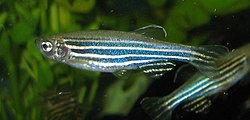
Zebrafish Study Yield Novel Genes Critical In Organ Development

Researchers at the University of Minnesota have identified a group of novel genes that are critical in organ development. The scientists studied the roles of genes in the zebrafish secretome. This group of genes makes proteins that are located on the surface or outside of cells in the body, and are responsible for directing "patterning" in the body, or ensuring that cells divide, differentiate and migrate to properly form vital organs in the correct places during development.
The research is published online in the current issue of the Public Library of Science journal ONE. Using a technique developed at the University in 2000 that allowed them to knock down, or turn off, specific genes, the researchers identified new genes that are implicated in the development of different systems and processes, such as blood and blood vessel development, formation of the eyes and ears, and metabolism of lipids, or fats.
In addition, instead of just examining what happens with one specific gene if it is turned on or off, they were able to directly compare the effects of removing different genes on organ formation and function."The different gene phenotypes found in the collection give us a new level of resolution for how these organs develop," said Stephen Ekker, Ph.D., associate professor of Genetics, Cell Biology and Development at the University of Minnesota Medical School, and lead author on the international multi-institutional study that includes scientists from the Max-Planck Institute of Immunology in Freiburg, Germany, and the Carnegie Institute of Washington in Baltimore, Maryland.
For this particular journal article, they examined 150 genes, and they will continue to work their way through all 4,000 that make up the secretome. Zebrafish are a good model for studying how the vascular system develops. They study genes that are "conserved" between zebrafish and humans. This means the genes exist and have the same function in both zebrafish and humans.

Monday, January 01, 2007

Plan May Put Squeeze on Snake Owners

Tighter rules urged as exotic pets adapt to Florida's wild
By David Fleshler / South Florida Sun Sentinel
Photo by steelrain of RTB.net
With giant snakes battling alligators in the Everglades, the state wildlife commission has proposed sharp restrictions on the owners of Burmese pythons and four other non-native reptiles, including a requirement to implant their slithery pets with computer identification chips.
Florida's climate has made the state a congenial home for species from Africa, Asia and South America let loose by their owners after they become too big or too high maintenance. A breeding population of Burmese pythons has been discovered in Everglades National Park, where the constrictors have been killing native birds, mammals, and in one notorious incident, an alligator. Elsewhere in the state, trappers routinely catch pythons and other large non-native snakes.
The new rules would limit sales of constricting snakes that grow to at least 12 feet, specifically Burmese pythons, reticulated pythons, African rock pythons, amethystine or scrub pythons and green anacondas. The rules also would restrict sales of Nile monitors, carnivorous lizards that can grow as long as 6 feet and already have established a breeding population in the Cape Coral area on Florida's Gulf Coast.
At the moment, anyone can walk into a pet shop and walk out with a python. Under the new rules, buyers would have to be 18 years old, complete a questionnaire, apply for a state permit, submit a plan for keeping the animal secure in case of a hurricane or other disaster, and have the reptile implanted with a computer chip. The rules would go into effect Jan. 1, 2008. They would be retroactive, although owners would have until that July 1 to comply with the chip requirement.
Commonly used to help return lost dogs, cats and birds, the computer chip identifying a reptile's owner would be implanted by a vet. If wildlife officials later catch the snake in the wild, they could check the chip, find the owner and charge him or her with a second-degree misdemeanor for allowing the non-native animal to get loose, said Capt. John West of the Florida Fish and Wildlife Conservation Commission. The maximum penalty would be a $500 fine and 60 days in jail.
Assuming -- and hoping -- that many owners of the big snakes would find these rules too onerous, the state plans to set up amnesty programs that would allow people to drop off unwanted reptiles at sites yet to be determined--no questions asked. "We don't know how many are out there," West said. "We have a suspicion it's a high number. We're hoping a lot of people will say they don't want to do this and turn them in." The restrictions would have to be approved by the wildlife commission, a seven-member board appointed by the governor. The commission initially will consider the proposals in February.

EDITORIAL: The government should not be involved with pet ownership in this manner. The potential complications of the implanted chip, along with expense, are unnecessary. While I do agree that owners should be at least 18 years of age, this type of knee-jerk reaction to large reptile ownership is onerous to those of us who are responsible pet owners. Anyone who dumps a pet in the Everglades (or elsewhere) should be fined. BUT, forcing the bureaucracy of state permits and tracking chips is much too Orwellian. I urge you to fight this tactic -- in Florida AND in your state.

Tuesday, December 26, 2006

Singing For Survival: Gibbons Scare Off Predators With 'Song'

It is well known that animals use song as a way of attracting mates, but researchers have found that gibbons have developed an unusual way of scaring off predators -- by singing to them.
The primatologists at the University of St Andrews discovered that wild gibbons in Thailand have developed a unique song as a natural defence to predators. Literally singing for survival, the gibbons appear to use the song not just to warn their own group members but those in neighbouring areas. They said, "We are interested in gibbon songs because, apart from human speech, these vocalisations provide a remarkable case of acoustic sophistication and versatility in primate communication. Our study has demonstrated that gibbons not only use unique songs as a response to predators, but that fellow gibbons understand them."
"This work is a really good indicator that non-human primates are able to use combinations of calls given in other contexts to relay new, and in this case, potentially life-saving information to one another. This type of referential communication is commonplace in human language, but has yet to be widely demonstrated in some of our closest living relatives - the apes." Gibbons are renowned amongst non-human primates for their loud and impressive songs that transmit over long distances and are commonly used in their daily routine when mating pairs 'duet' every morning. Songs in response to predators -- mostly large cats, snakes and birds of prey -- have been previously noted, but no extensive research into its purpose or understanding by other gibbons has been done until now.
The team, Esther Clarke, Klaus Zuberbuhler (both St Andrews) and Ulrich Reichard (Max Planck Institute, Germany) observed the singing behaviour of white-handed gibbons in Khao Yai National Park, Thailand. They were able to identify individual gibbons according to their voice and describe gibbon songs as a 'crescendo of notes', formed by combining up to seven notes -- including 'wa', 'hoo', 'sharp wow' and 'waoo' -- into more complex structures or 'phrases'. The researchers wanted to establish whether there were any differences between the typical duetting morning song and that delivered in response to a predator. They noted subtle differences between the two songs, particularly in the early stages (first ten notes) of the song, which would be important in the case of predator encounters. Songs usually begun with a series of very soft notes, audible only at close range, but which rapidly changed into louder notes heard over long distances.
They said, "We found that gibbons produce loud and conspicuous songs in response to predators to alert kin, both near and far -- since gibbons frequently change group compositions, neighbouring groups often consist of close relatives. We found that gibbons appear to use loud 'long-distance' calls to warn relatives in neighbouring areas and that those groups responded by joining in the singing, matching the correct predator song, demonstrating that they understood the difference between calls." The researchers also observed the singing behaviour of gibbons spending time away from their home group. They noted that during predator songs within the group setting, the absent individual responded with his own song, before reappearing to join the group again. Because gibbons are unusually monogamous, it is thought that sexual selection is the main evolutionary mechanism for the evolution of gibbon song.
The researchers concluded, "Vocal behaviour appears to function as a powerful tool to deal with immense sexual competition under which these primates operate, and it may not be surprising that they have evolved unusually complex vocal skills to deal with these social challenges.
"Not unlike humans, gibbons assemble a finite number of call units into more complex structures to convey different messages, and our data show that distant individuals are able to distinguish between different song types and understand what they mean. This study offers the first evidence of a functionally referential communication system in a free-ranging ape species
."
"Finding this ability among ape species, especially gibbons who in a sense bridge the evolutionary gap between great apes and monkeys, could shed light on when this ability developed in the primate lineage."
Citation: Clarke E, Reichard UH, Zuberbühler K (2006) The Syntax and Meaning of Wild Gibbon Songs. PLoS One 1(1): e73. (http://dx.doi.org/10.1371/journal.pone.0000073) Note: This story has been adapted from a news release issued by Public Library of Science. Article sourced from ScienceDaily.

Wednesday, December 20, 2006

New Reptile Population for Hauraki Gulf Islands

A team of Massey University biologists is relocating more than 60 of the relatively rare Duvaucel’s geckos to Motuora and Tiritiri Matangi islands in the Hauraki Gulf. The transfer, along with that of a group of skinks, is aimed at helping protect the gecko population and enhance the reptile fauna of the islands, both of which are predator-free.
For Motuora it is part of ongoing restoration project. Although there are now only two native reptile species there, evidence suggests it was home to as many as 13 reptile species, including tuatara, before forest was cleared. Both islands are predator free.
Auckland Campus conservation biologists Dr Dianne Brunton and Dr Weihong Ji are conducting a reptile study and will be monitoring the geckos and skinks after they are released into their new island habitats. Dr Brunton describes the transfer as exciting and very important to both the species and the islands. “It will help to build a more complete ecology on both islands,” she says. “It’s also expected to help in rebuilding the populations of these species which have low reproduction rates.”
The Massey scientists have been holding the geckos and skinks in quarantine to ensure they are disease-free, while preparing the islands for the transfer, checking existing species for diseases and carrying out night searches to collect other data on the habitat.
Duvaucel’s geckos are New Zealand’s largest, growing up to 16cm long and weighing up to 120g. They are sparsely distributed on the northeastern islands off the North Island and in Cook Strait. Project partners include the University, the Department of Conservation, Auckland Regional Council and the Motuora Restoration Society.